
 (610) 594-2394
 Call
us: (610) 594-2394
Call
us: (610) 594-2394
Call
us: (610) 594-2394
Call
us: (610) 594-2394
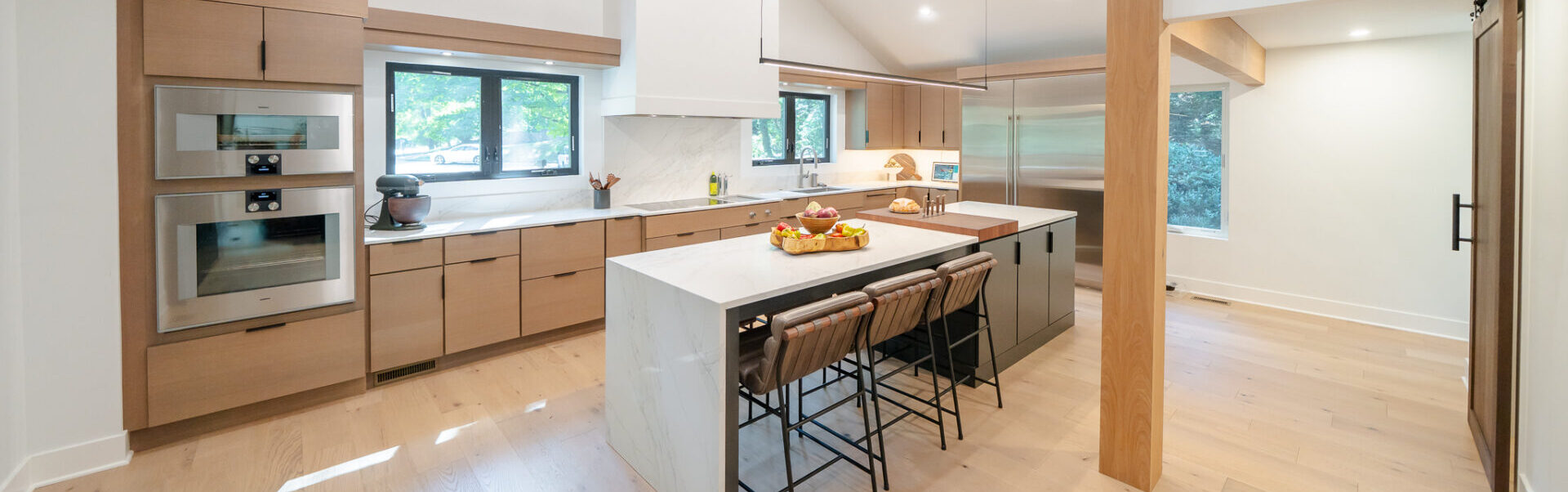

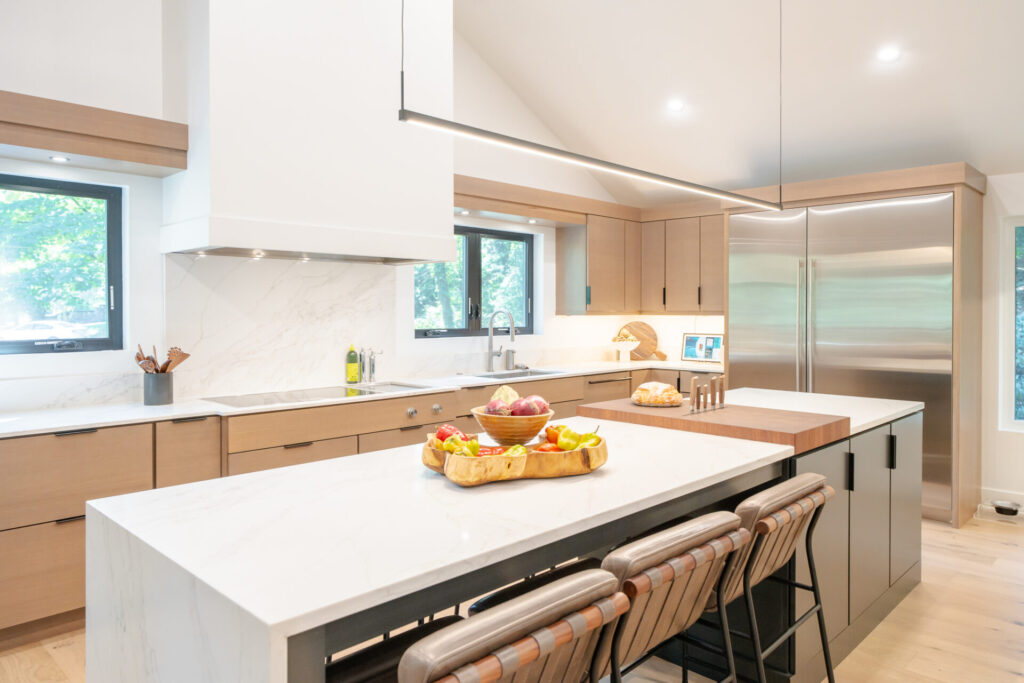
When homeowners picture a kitchen remodel, visible choices often come first: cabinet style, countertop material, appliances, and color. Those decisions matter, but they cannot make a kitchen work well unless the space also reflects the people using it.
The most useful way to design a kitchen around your life is to begin with the ordinary routines the room needs to support. In this article, COCOON Design & Style Advisor Sandra Phillips explains how those routines can guide layout, storage, long-term flexibility, finishes, and technology. The goal is not simply a kitchen that photographs beautifully. It is a kitchen that makes everyday life easier, starting with a moment you probably know well.
Think about your kitchen at 7:14 on a Tuesday morning.
The coffee is brewing. Your spouse cannot find a clean water bottle. A lunchbox is open on the island with only a napkin and a Tastykake packed. The news is telling you the Schuylkill is backed up again. Your kid wants something from the refrigerator. And somehow three people are standing in the exact spot where you need to be.
That is kitchen design.
The kitchen earns a surprising amount of our day. In Houzz research, nearly two-thirds of renovating homeowners said they spend three or more hours there each day. Yet when it’s time to remodel, many people begin by thinking about cabinet colors, pristine countertops, or top-of-the-line appliances.
But when you have a household to run, your real kitchen isn’t pristine. It’s backpacks, hot coffee, sheet pans, birthday cakes, takeout containers, homework, a Thanksgiving buffet, and Tuesday morning when someone’s yelling from the cupboard, “Where are the snacks?”
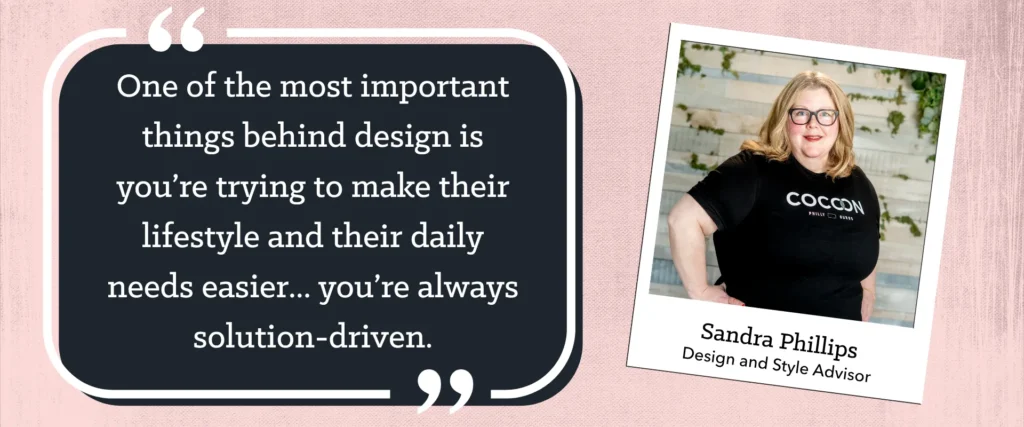
“You want to really think in terms of how they’re going to use the space, who is going to be using the space, and then what will make their life easy.” – Sandra Phillips, Design & Style Advisor
Those choices matter, but they’re not where great kitchen design begins. According to COCOON Design & Style Advisor Sandra Phillips, the most successful kitchens are designed around something much more important:
Your everyday routine.
The beautiful kitchens you see online can spark great ideas, but the most successful designs are the ones thoughtfully tailored to your routines, needs and lifestyle.
Every family functions differently. Some cook elaborate meals every night. Others meal prep on Sundays. Some entertain constantly. Others simply need a place where everyone can gather after work and school.
The person using a cabinet matters just as much as what goes inside it. A snack drawer designed for a six-year-old should work differently from storage meant for a grandparent, an avid baker, or the person cooking dinner every night.
Sandra explains that the first step isn’t selecting cabinetry. It’s asking questions.
Those conversations become the blueprint for everything that follows.
One of Sandra’s philosophies is simple: design should solve problems before it creates beauty.
If someone cooks every day, storage should be designed differently than it would be for someone who orders takeout several nights a week. Someone who loves baking needs different storage than someone who loves entertaining.
Collectors may benefit from glass-front cabinetry that displays inherited china or pottery instead of hiding it away. Every kitchen becomes personalized, not because it’s trendy, but because it supports the homeowner’s lifestyle.
“More storage” sounds good until you realize you can have 40 cabinets and still spend every night digging through one terrible drawer for the garlic powder.
Sandra prefers a different question:
Storage for what?
If you cook five nights a week, your kitchen should know that. If you bake every Sunday, your kitchen should know that too. If the inherited Christmas dishes come out once a year but mean everything to you, the kitchen should know that.
That might mean:
Good storage does not mean your kitchen should hold more stuff. It means making your kitchen ask you to do less work.
The goal is not to predict every future need. It is to avoid designing a kitchen so rigidly that it cannot respond when life changes.
That flexibility is an important part of how you design a kitchen around your life. One of Sandra’s favorite examples is the refrigerated snack drawer.
When the kids are young, it might hold juice boxes, fruit, and cheese at a height they can reach themselves. Years later, the Goldfish crackers disappear, and the same drawer becomes a place to chill a platter of pastries before friends come over for coffee.
Same drawer. Completely different Tuesday.
The best kitchen investments continue to provide value long after your family’s routine changes.
Most people think color is purely aesthetic. Sandra sees it differently: color shapes emotion.
Warm wood cabinetry creates a different feeling than crisp white cabinets. Dark walls can make cabinetry the focal point. Balanced materials, proper proportions, and thoughtful color selection can create spaces that simply feel right the moment someone walks in.
Good design isn’t accidental. It’s the result of understanding how colors, materials, lighting, and scale work together to influence the way people experience a room every day.
Kitchen trends come and go. Sandra recommends investing in timeless elements that won’t feel dated in ten years.

When homeowners want to make a statement, the safest place to do it is often through elements that are easier to update later—lighting, hardware, paint colors, or decorative fixtures—rather than permanent investments like cabinetry.
Hidden pop-up outlet systems. Voice-controlled faucets. Smart appliances. Connected home systems. Kitchen technology continues to evolve quickly.
Your refrigerator can apparently tell you when you’re out of milk now.
Cool.
But will that make your life better?
Sandra’s rule for kitchen technology is not “get the newest thing.” It is to understand the problem first.
Take this hidden pop-up outlet, for example. It solves a very ordinary kitchen problem: we want electricity where we need it, but we do not necessarily want to stare at outlets across a clean countertop or island.
The same test applies to more advanced technology. A hands-free or voice-controlled faucet might be genuinely valuable for someone managing food allergies, messy food preparation, or limited mobility. In that case, the technology is doing work.
The distinction matters:
A gadget becomes good design when you would miss it if it disappeared.
For one week, become suspiciously observant of your own kitchen. M. Night Shyamalan-level observant.
Don’t try to redesign anything yet. Just watch what happens.
Pay attention to:
Write that last one down. Tiny frustrations often point to surprisingly important design decisions.
A great kitchen will still have backpacks on the island. Someone will still forget where the snacks are. The Schuylkill will, almost certainly, still be backed up.
Good design isn’t supposed to eliminate life.
It’s supposed to make life easier to live.
That’s the idea Sandra returned to again and again. Every cabinet, drawer, storage solution, finish, and feature should answer one question:
How does this improve the way you live?
When a kitchen is designed around your daily routine instead of somebody else’s Pinterest board, it doesn’t just look better. It works better, even as Tuesday mornings change.
Sandra Phillips is COCOON’s Design & Style Advisor, bringing more than 20 years of experience in residential design and creative leadership. She guides the company’s design vision, mentors its design team, and helps translate emerging trends into timeless, livable spaces. Through her leadership in design standards, material curation, and style forecasting, Sandra plays a key role in shaping COCOON’s distinctive approach to elevated residential design.